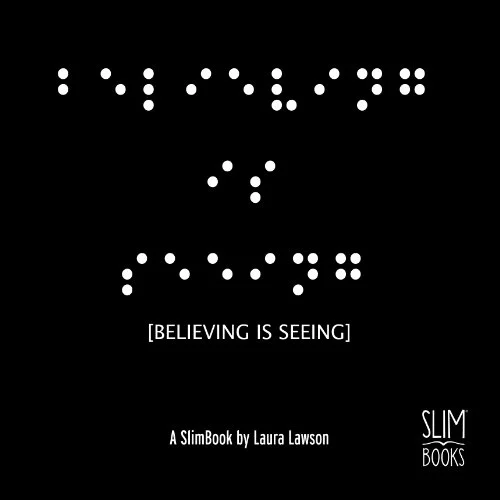
For a deeper look into my story, check out Believing is Seeing, a short ebook I published a few years back chronicling my healing journey and how I reconciled with God. It's only a couple bucks, and 100% of proceeds benefit the Foundation Fighting Blindness.
In 2009 I learned I was losing my vision. "I think you have retinitis pigmentosa," that first eye doctor told me, unable to meet my gaze as she flipped through a dusty old textbook. I had a disease so rare that she had to look it up in a book to be sure. A disease I could barely pronounce. I had her write it down for me so I could practice saying it. Many tests and doctor's visits later, my official diagnosis the following year came through, proving her suspicions correct: I did indeed have retinitis pigmentosa, commonly referred to as RP.
I am not blind, nor do I have "normal" vision. I am somewhere in-between; I am visually impaired.
Retinitis pigmentosa, as Google will tell you, affects the cones and rods in the retina, which are tiny cells in the back of the eye. RP affects the outer layer of the retina first, progressively working its way inward, usually very slowly over the course of many years. The rods and cones in the back of the eye literally die and do not provide light signals to the brain, concluding in blindness or partial blindness later in life. I do not have much of my peripheral vision left, and very little night vision. Normally sighted people have approximately 155 degrees of vision while looking straight ahead (this article does an excellent job explaining peripheral vision), whereas today I maintain only about 24 or 25 degrees of vision (both up and down and side to side) when looking ahead. To put it plainly, I see in tunnel vision.
There is no cure for what I have.
The cells left in my eyes are weakened and have a difficult job transferring information to the brain when going from light places to dark places or vice versa. My eyes work very hard to see amidst even subtle light changes in the environment, working to translate light into meaningful images that my brain can interpret; but no matter how hard they fight or how healthy I eat, the fact remains: I am still losing my vision.
The implications of what I go through are complex and yet simple. I am able to function as a "normal" person quite easily, but certain tasks (like driving) are rendered completely impossible.
Thankfully, hope pervades. There is a lot of hope, as a matter of fact. Whispers of stem cell research have grown louder in the past couple of years, and perhaps even more exciting, the invention of the artificial retina (sometimes called the bionic eye) is beginning to make headlines outside obscure medical journals. Because of devices like the Argus II Retinal Prothesis and others similar, it is unlikely I will ever be completely blind. In essence, companies like the one behind the Argus II are manufacturing a chip wired to the optic nerve in the back of the eye that works like a camera lens, connecting light entering the eye to the brain to create meaningful images. Blind people implanted with the early models of this device are now able to distinguish shapes and read large letters. Medical technology is at an amazing place right now!
For the past couple of years, I have participated in a clinical trial hosted by my ophthalmologist Dr. Duncan at UCSF in San Francisco. There are a couple hundred of us in the study, which is spanning over the course of four years. Reader's digest version... a few people in the study were injected with a particular protein thought to slow the progression of the disease over time. I am in the control group, so nothing was injected into my eyes, but my progression is tracked all the same. The study is using a high quality imaging device to measure the cones in the back of our eyes to determine how they change over time, which will hopefully help Dr. Duncan and her team understand RP and similar diseases. It is an amazing thing to be a tiny part of the movement to find a cure. Every January, I fly down to San Francisco and spend a day at UCSF where I witness the entire trial in action, as a team conducts test after test on my eyes, measuring the change over time. Thankfully, my vision is progressing so slowly that it's almost immeasurable year to year.
I gave up driving in 2009. Legal blindness is defined as less than 20 degrees of vision collectively; I maintain about 25 degrees today. With my doctor's strong urging, I stopped driving by choice, knowing I would be forced to eventually anyway. I did not wish to put others nor myself in harm's way. The years following this decision have involved a deliberate lifestyle change as I have learned what it means to cope and have a career in a society that revolves around freedom, independence, and mobility. I rely on others, my bike, and public transportation to get around.
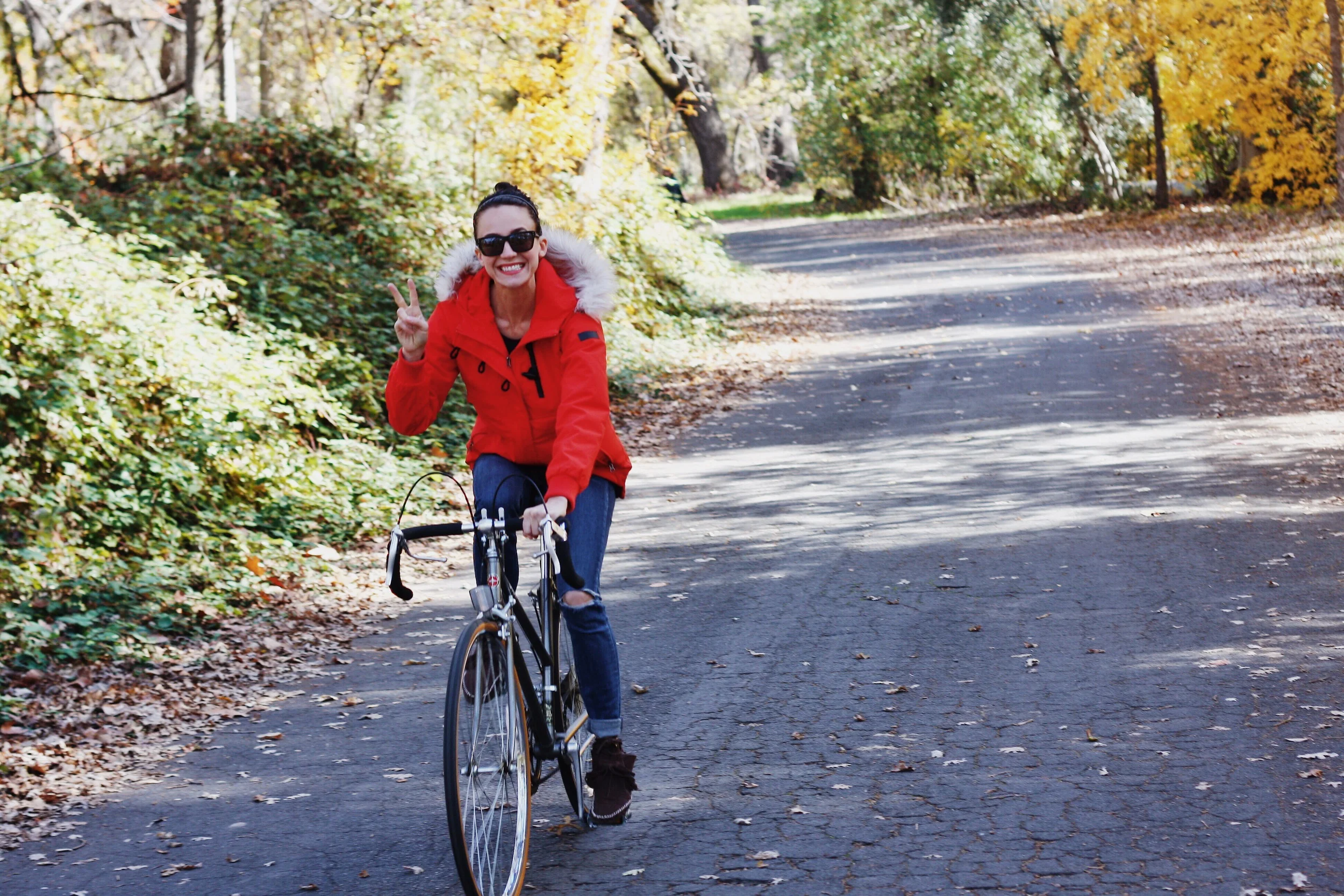
You may be wondering how I get around on a bike when I do not drive. The answer is very carefully. The way I see it is this: on a bike, the only person's life in danger is my own. Behind the wheel of a car, everyone around me is in danger. Riding my bike is a risk I'm willing to take. I need the independence. Thankfully, a lot of people in Portland are bike commuters like me, so it is a conducive environment to my condition.
These days I don't usually think about my vision very often, as I've gotten used to what it's like to only see in tunnel vision. I have to be extra careful as I move around, particularly in newer environments, but I scan a lot and my brain fills in the information that my eyes miss. Many people ask me if I see black in the peripherary where I've experienced vision loss and the answer is that I do not; I simply do not see anything, same as the boundaries beyond a normal sighted person's range of vision. In day-to-day terms: I do not see objects or people that unexpectedly pop up in my path, like a waiter approaching my table at a restaurant, or someone offering a handshake. I have to be extra careful at nighttime; the built-in flashlight in my iPhone often comes in handy! The central vision I do have left is very sharp and healthy, so unlike macular degeneration or other retinal diseases, I do not suffer from blurry vision (unless I don't have my contacts in, but that's a different story). Many people ask if glasses can help and the answer is a resounding no — people who need glasses are farsighted or nearsighted; the cornea is only slightly misshapen and is easily fixed. My disease is in my retina in the back of the eye, a very different and much more complex area.
I may indeed lose all my vision someday. Not having something in a world that expects you to have that something is a gift, I think. A gift of appreciation, of gratitude, of humility, and especially of faith. There is nothing quite so freeing as acknowledging I am going blind, accepting it, and choosing to live as richly as possible in spite of it. I may be losing my vision, but I'd like to think that I see so much.